SCALE
A ball and a grain
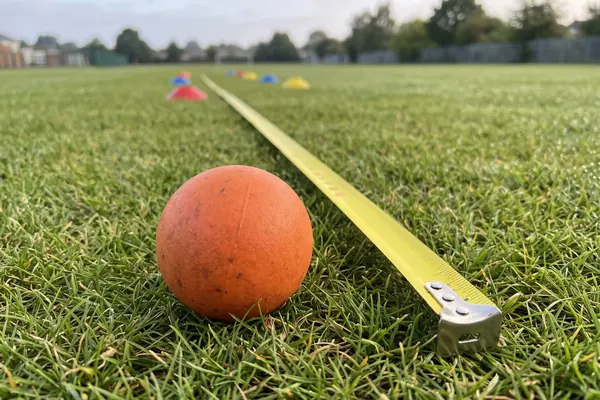
In NASA's schoolyard model the Sun is a 9.8 cm ball. Earth is a dot under 1 mm wide, 10.5 metres away.
Pace it out doodlesystem
00WHAT THE NUMBERS SHOW
Textbook diagrams squeeze the planets together.
To fit on a page, pictures of the solar system shrink the distances far more than the planets. Put both on the same scale and you get a few specks scattered across a playing field, or along a 10 km cycle path.
Pace it out01Principles
02THE SHORT ANSWER
Planet sizes are counted in thousands of kilometres.
Their distances from the Sun run to millions and billions.
SCALE
In NASA's schoolyard model the Sun is a 9.8 cm ball. Earth is a dot under 1 mm wide, 10.5 metres away.
Pace it outDISTANCE
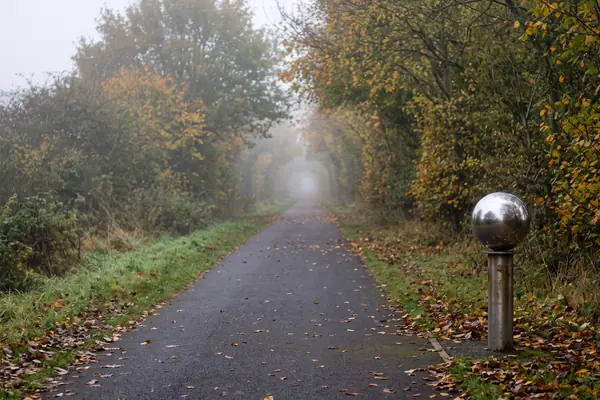
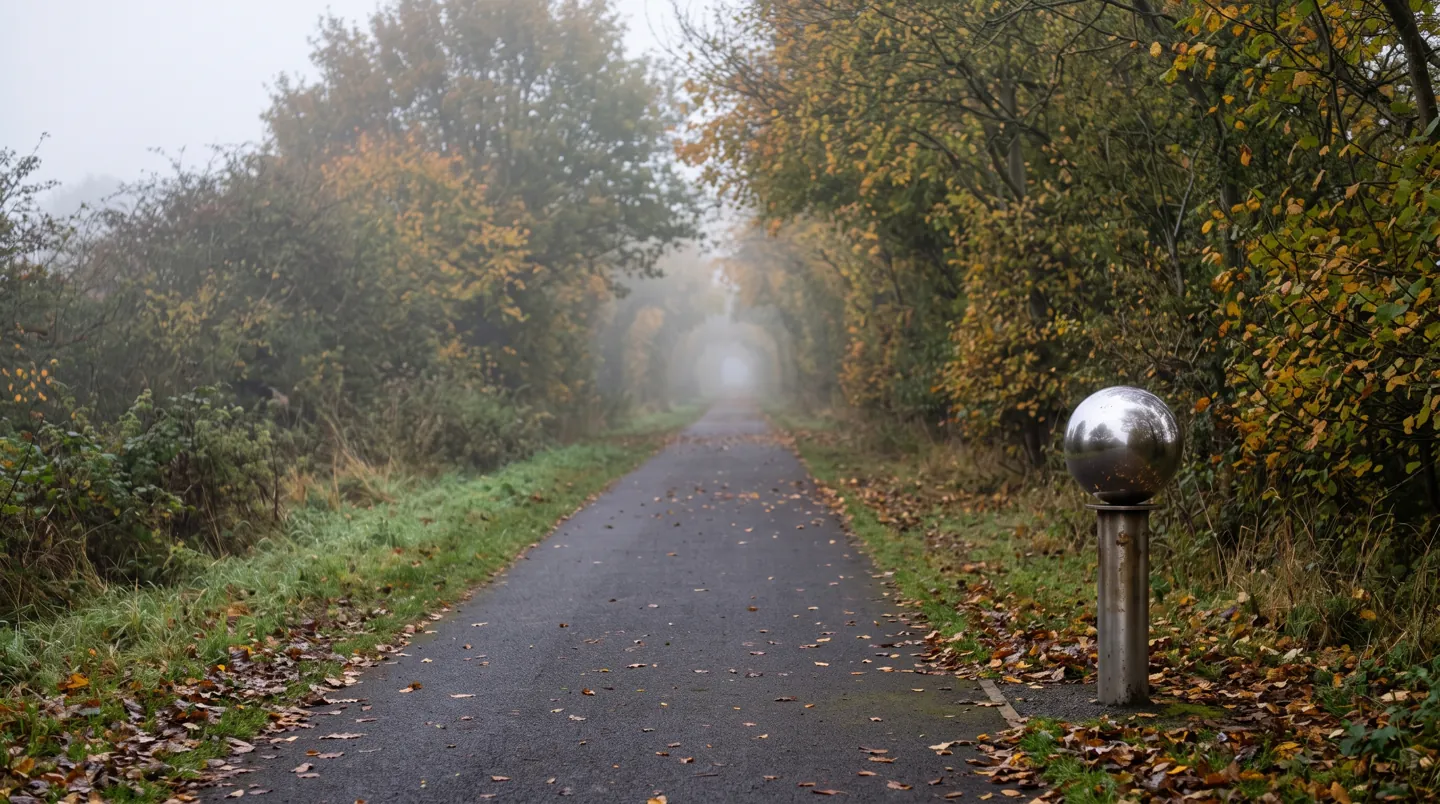
A scale model on the York to Selby cycle path spreads the planets along 6.4 miles (10 km), with Pluto at the far end.
See the numbersBEYOND
NASA says the Oort Cloud, a shell of icy debris, may reach as far as 1.6 light-years from the Sun.
How far it goes03A SCHOOLYARD MODEL
In NASA's schoolyard model the Sun is a ball 9.8 cm across. Pick a world to see how big it is and how far from the Sun ball you would stand. The bar shows how far you walk.
Scaled sizes and distances from NASA's Schoolyard Solar System, 100 metre to Saturn model (metric).
04TWO NUMBERS WORTH KNOWING
Astronomers measure the planets in AU:
one AU is roughly the distance from Earth to the Sun.
≈ 30 AU
its distance from the Sun in astronomical units
One astronomical unit is defined as exactly 149,597,870.7 km, close to the average Earth–Sun distance. Neptune orbits about 30 times further out.
NEPTUNE
> 99%
of the solar system's matter
As the solar system formed about 4.6 billion years ago, NASA says the Sun gathered more than 99% of the available matter, leaving the rest for planets, moons and debris.
THE SUN
Sources: IAU Office of Astronomy for Education glossary; NASA Science, Solar System Facts.
05MAKE YOUR OWN MODEL
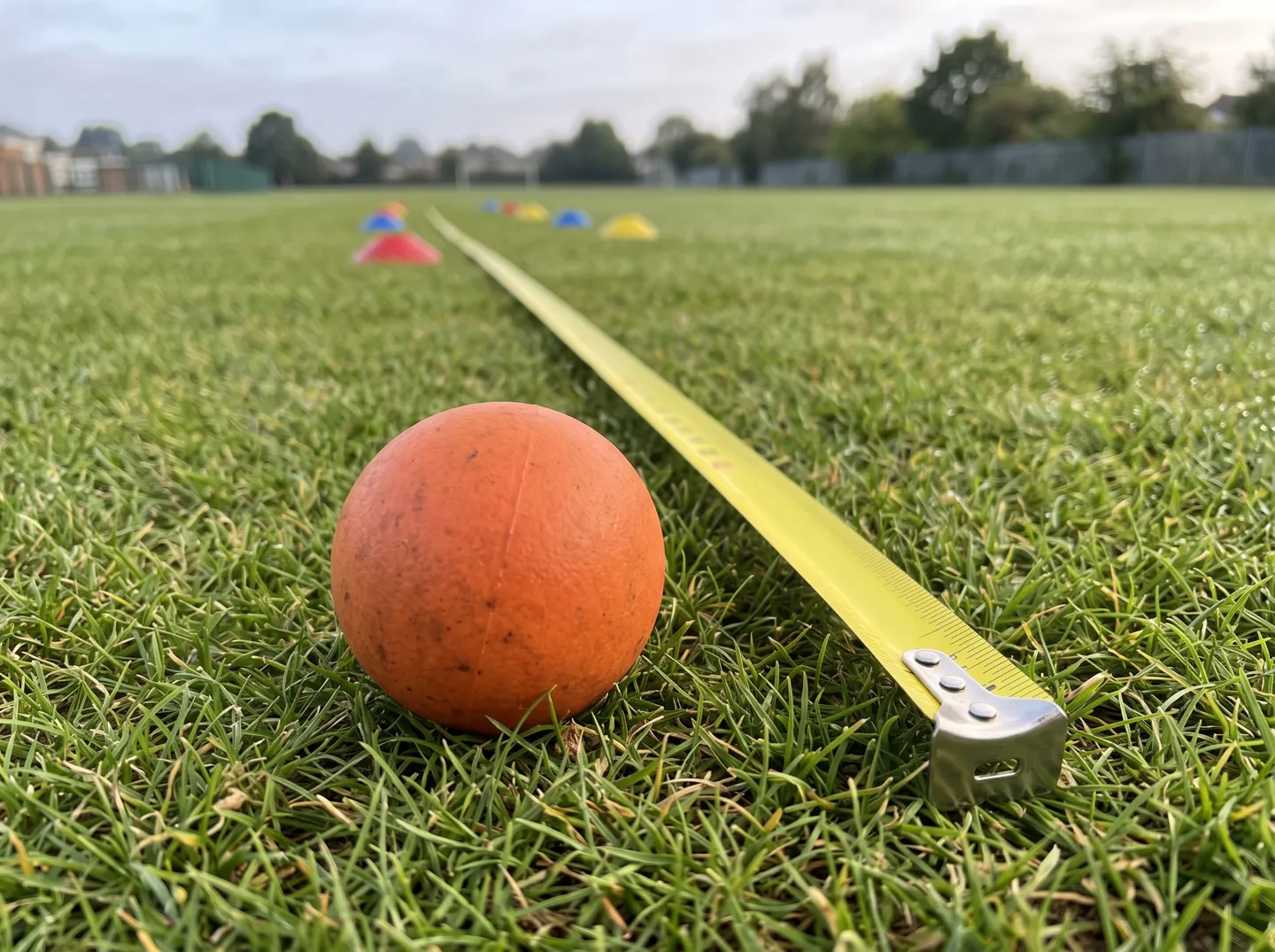
NASA designed its schoolyard model for a playground or sports field. Here is the idea in four steps.
Start with a ball about 10 cm across for the Sun. At that scale the 100 metre model puts Saturn at the end of a long field.
Earth sits 10.5 metres from the Sun ball and Mars 16 metres. At this scale both are dots smaller than a millimetre.
Jupiter is 54.5 m out and Saturn 100 m. Neptune needs 315 m and Pluto 414 m, so most models stop at Mars or Jupiter.
From the outer planets, try to spot the other dots. NASA suggests this to show how sizes in thousands of km compare with distances in billions.
06PAST THE PLANETS
Beyond Neptune lies the Kuiper Belt, a ring of icy bodies that includes Pluto. The Sun's solar wind slows abruptly at the termination shock, between 80 and 100 AU, which Voyager 1 crossed in 2004 and Voyager 2 in 2007.
Further out still, the Oort Cloud is predicted to extend from 5,000 to 100,000 AU. It has never been directly observed, and NASA says it will be many thousands of years before the two Voyagers leave it.
07Questions
NASA counts one star, eight planets and five officially named dwarf planets, plus hundreds of moons and thousands of asteroids and comets.
A unit of distance defined as exactly 149,597,870.7 km. It is close to the average Earth–Sun distance, which was its earlier definition, and is used for distances within the solar system.
Planet sizes run to thousands of kilometres while distances from the Sun run to millions and billions. Drawn to one scale, most planets would be specks too small to see on a page.
Yes. A model on the York to Selby cycle path, opened in 1999, spreads the planets along 6.4 miles (10 km) at a scale of 575,872,239 to 1.
NASA's planetary fact sheet gives Neptune's orbital period as 59,800 days, compared with 365.2 days for Earth.
08Sources
ABOUT THIS NAME
doodlesystem.com is part of the DoodleSale portfolio. It isn't in an auction right now, but you can ask about leasing it.